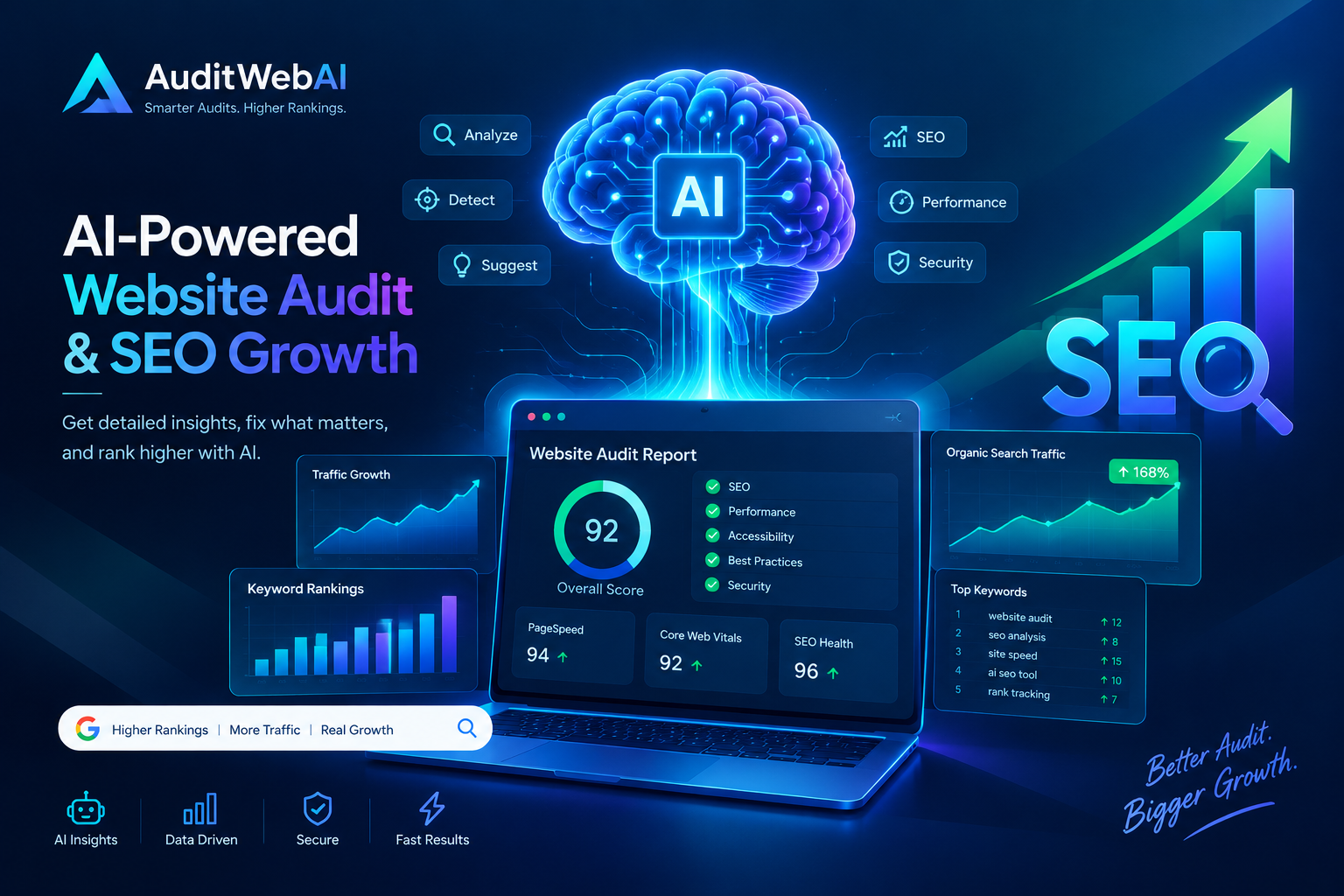
Introduction to AI SEO Audits
In the ever-evolving landscape of digital marketing, staying ahead of search engine algorithms is more challenging than ever. With Google continually refining its ranking criteria, relying on a traditional manual SEO audit is no longer enough to guarantee top positions. Enter the AI SEO Audit—a revolutionary approach that leverages artificial intelligence and machine learning to analyze, optimize, and scale your website's search engine performance.
An AI SEO audit goes far beyond simple keyword density checks. It simulates search engine crawlers with incredible precision, identifying complex technical bottlenecks, content gaps, and user experience issues in a fraction of the time it would take a human expert. If your goal is to drive massive organic traffic and secure high-ranking positions, integrating AI into your SEO strategy is not just an option; it's a necessity.
Why Traditional SEO Audits Are Becoming Obsolete
For years, webmasters and SEO professionals spent days, if not weeks, manually pulling data from various tools to compile an audit report. Here is why the manual approach is fading away:
-
Speed and Efficiency: AI-powered tools can crawl thousands of pages in minutes, delivering real-time insights and actionable data instantly.
-
Predictive Analysis: Unlike manual audits that look at historical data, AI algorithms can predict future ranking trends and suggest keywords that are about to trend in your niche.
-
Pinpoint Accuracy: Human error is inevitable. AI accurately detects micro-errors like orphaned pages, deeply buried 404 links, and complex JavaScript rendering problems that human eyes often miss.
Key Components of a Comprehensive AI Website Audit
When you utilize an advanced platform like AuditWebAI, the system breaks down your website's health into several critical categories. Here is what a high-quality AI SEO audit evaluates:
1. Deep Technical SEO Analysis
Technical SEO is the foundation of your website. Without it, even the best content won't rank. An AI audit thoroughly checks your site architecture, XML sitemaps, robots.txt, and crawlability. It identifies "crawl bloat" and ensures that search engine bots are spending their crawl budget on your most valuable pages. (Internal Link Suggestion: Link this paragraph to your "Features" or "Technical SEO Tools" page using the anchor text "technical SEO tools".)
2. Advanced Content Optimization and NLP
Search engines now use Natural Language Processing (NLP) to understand the context of your content. An AI SEO analyzer evaluates your web pages against top-ranking competitors. It suggests Latent Semantic Indexing (LSI) keywords and calculates the perfect TF-IDF scores to ensure your content is highly relevant and authoritative in the eyes of Google.
3. Backlink Toxicity & Authority Tracking
Not all links are created equal. A sudden influx of spammy or toxic backlinks can trigger severe penalties and drop your rankings overnight. AI algorithms continuously monitor your backlink profile, instantly flagging toxic domains so you can disavow them before they cause permanent damage.
4. Core Web Vitals and User Experience (UX)
Google heavily prioritizes User Experience (UX) through Core Web Vitals—focusing on loading performance, interactivity, and visual stability. AI tools simulate user interactions across various devices and global locations, providing strict recommendations on how to minimize render-blocking resources, optimize images, and improve your overall page speed.
How to Perform an AI SEO Audit Effectively
Getting started is easier than you might think. Follow these steps to optimize your site:
-
Run a Full Site Crawl: Enter your domain into your AI audit tool. Let the intelligent bots scan every single URL, image, and script on your domain.
-
Review the Health Score: Most AI platforms will generate a comprehensive SEO Health Score. Pay immediate attention to "Critical Errors" (like broken internal links or duplicate meta tags) before moving on to "Warnings" and "Notices".
-
Optimize High-Value Pages First: Focus your efforts on pages that already generate traffic or revenue. Use the AI’s content optimization suggestions to update old blog posts and landing pages. (Internal Link Suggestion: Link to a related blog post about "On-Page SEO Optimization tips".)
-
Automate Regular Audits: SEO is an ongoing process. Set up your AI tool to automatically crawl your website weekly or monthly so you never miss a new technical issue.
Conclusion
The future of search engine optimization is undeniably tied to artificial intelligence. An AI SEO Audit removes the guesswork, providing you with data-driven, highly accurate, and instantly actionable insights. By embracing this technology, you can fix technical errors faster, create highly optimized content, and ultimately skyrocket your website's organic traffic.
Don't let your competitors outrank you. Start leveraging the power of AI today and take complete control of your search engine rankings!